

Anyone who has read biographies of Presidents Andrew Jackson, Martin Van Buren or James K. Polk has heard the name Felix Grundy.
Felix Grundy was a former Kentucky lawyer and U.S. Representative who moved to Tennessee and became a lawyer and politician there as well. He was known for his oratory. He was a master of juries. He had been a fine Chief Justice at the state level. And in 1819, when 23-year-old James K. Polk determined that he wanted to study law, he could find no one better than Felix Grundy to clerk under in Nashville.
Grundy had another student under him at this time— a young man by the name of Francis B. Fogg. Fogg was smart and he was certainly on a path to a great career, but when Felix Grundy was elected to the state legislature, Fogg had the opportunity to accompany him and become a legislative clerk and he turned him down. Fogg said he was too busy working on other cases.
James Polk, however, understood the opportunity much better than Fogg. Here was his chance to both study law and open a window on the legislative process. He stood up and asked Grundy to help him get the job. So…he ended up accompanying Grundy to Murfreesboro, where the state legislature met. When he arrived, he still had to be “elected” by the Tennessee Senate to be its clerk. On Grundy’s good word, they did so and they paid him $6.00 per day. It was good pay, but what Polk really got out of the deal was a full education in politics and legislatures. No one but the clerk really captured it all. The clerk had to pay attention to every word, every motion and every moment. What Polk was doing was finding out how Congress operates before he was ever a member.
This is the kind of moment that makes Presidents. If you look at our Presidents, you can often find one or two or several key moments that seem like they had to happen in order for the person to become President. Certainly this training paid off for Polk when during his many terms in the U.S. House of Representatives and especially when he was considered one of the best Speaker’s of the House to have ever served. The Speaker of the House was not simply about process, but the Speaker is about order. Speakers have to be respected and they have to know how to lead. And they have to have drive. When Fogg said no to the clerkship, and Polk stood up…in that moment you see the inner desire that will compel a man or a woman toward the Presidency or some other position of leadership. Leaders volunteer. Leaders serve.
So, Polk starts as a clerk in the Tennessee Senate.
By 1822, just three years later, Polk is an accomplished lawyer and a member of the Tennessee legislature himself. He’s also quite the orator and he can hold his own in a debate. He has a reputation for advocating his opinions well. It didn’t matter, necessarily who was on his side and who wasn’t. In fact, early on, he was in direct opposition to his fellow congressman and former mentor, Felix Grundy. On bank issues and land issues, Polk debated Grundy and didn’t let their former relationship get in his way.
This frustrated Felix Grundy immeasurably. He would give a persuasive argument and young Polk would rise and often refute Felix’s position point by point. In one instance, Grundy muttered to his cronies,
“I have been preparing a club here…with which my own head is to be broken.”
Grundy may have been momentarily frustrated, but he had to have been proud when he lived to see Polk become the Speaker of the House and the Governor of Tennessee. Unfortunately he didn’t live to see him become President. Grundy is important in our history, not only for his own accomplishments, but also for advancing Polk on his path to the presidency. Like George Wythe to Thomas Jefferson or Thomas Jefferson to Madison and Monroe, Felix Grundy launched James Polk — and for that he should be remembered.
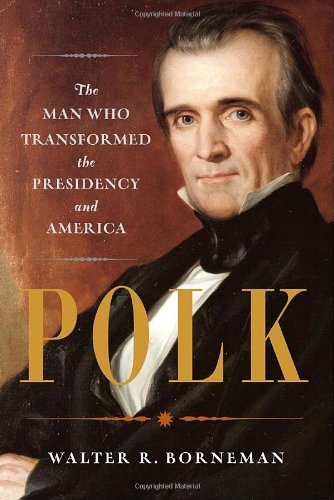
Primary Source: Polk: The Man Who Transformed the Presidency and America by Walter R. Borneman
For more information on Felix Grundy, read Democracy’s Lawyer: Felix Grundy of the Old Southwest by J. Roderick Heller III.


